
Share this
by Ewan on Feb 16, 2026 11:00:00 AM
How Ema Pharma prepares for supplier audits and ensures GMP excellence
When you’re responsible for qualifying suppliers of primary packaging components, your job goes far beyond ticking checkboxes. You're looking for more than certificates: you need evidence of GMP behavior embedded in day-to-day operations. You expect consistency, traceability, and a demonstrated culture of quality that doesn’t falter under scrutiny.
At Ema Pharma, GMP compliance isn’t a claim. It’s a system engineered for audit-readiness and built into every layer of production - from raw material sourcing to camera-inspected caps packed in validated sterile bags.
Whether you're overseeing a routine supplier qualification or preparing a remediation strategy tied to Annex 1 updates, this article gives you a detailed view of how Ema Pharma meets (and anticipates) the demands of GMP-focused QA teams like yours.
I. Foundations of GMP Compliance at Ema Pharma
A. Certification Under ISO 15378: A Framework Purpose-Built for Primary Packaging
Ema Pharma is certified to ISO 15378:2017, the internationally recognized GMP standard specifically designed for primary packaging materials for medicinal products. It is built on ISO 9001 principles but goes further, integrating pharmaceutical-grade requirements such as risk-based process control, contamination management, and traceability.
This certification covers:
● Risk management methodologies based on ICH Q9, applied across production and quality systems
● Full batch traceability, from incoming raw aluminum and polypropylene to final shipment of sterilized caps
● Comprehensive documentation, including controlled records for cleaning, packaging, validation, and release
● Product safety and conformity assessments, embedded in quality planning and real-time monitoring
ISO 15378 certification is not static; it is actively maintained through annual surveillance audits by an accredited third-party body. These audits include reviews of preventive actions, supplier control, equipment maintenance, and GMP awareness across functions. This level of scrutiny and transparency provides QA teams with the confidence that Ema operates under a mature, regularly verified quality system.
For many of our customers, ISO 15378 compliance is a baseline expectation during supplier qualification and ongoing audits. Ema integrates this standard into every layer of its production and QA operations, not just to pass audits, but to ensure consistent performance over time.
B. Documented Quality System and Regulatory Alignment
GMP compliance at Ema Pharma is sustained through a robust, living quality system, documented in detail and continuously improved.
Key components include:
● Change control: Any modification to equipment, raw materials, procedures, or suppliers follows a documented change request process, with QA oversight, impact assessment, and validation as required.
● Deviation and CAPA management: Deviations are recorded, investigated, and closed using root cause analysis (e.g. 5 Why, Fishbone), with corrective and preventive actions tracked until full resolution.
● Validation Master Plan: The VMP governs cleaning validation, sterilization cycle qualification (e.g. gamma irradiation), packaging integrity, and any process considered critical for product conformity.
● Batch documentation and review: Each production batch is recorded in real time, including in-process controls, visual inspections, packaging operations, and final release. QA reviews all records prior to approval.
● Personnel training and requalification: Every Ema Pharma employee involved in GMP operations is trained upon hire and requalified at least every 24 months. Training includes contamination control, good documentation practices (GDP), and audit readiness.
This system is fully aligned with EU GMP (Annex 1), and also reflects FDA and ICH expectations in areas such as container closure integrity, sterile component control, and lifecycle validation.
To support global pharmaceutical operations, Ema Pharma has also filed:
● A Type III Drug Master File (DMF) for Push-Off caps with the U.S. FDA
● A corresponding registration with the Chinese NMPA
● A Canadian DMF, currently in progress
These regulatory submissions allow customer QA departments to access detailed information on materials, processes, and GMP controls without duplicating evaluation efforts, enabling faster supplier qualification and smoother regulatory inspections at their own sites.
II. Preparing for supplier audits: what QA teams can expect
A. A structured audit response process
Every audit at Ema Pharma begins with proactive transparency. The quality team understands the expectations of auditors and prepares accordingly — not just to demonstrate compliance, but to facilitate a focused and efficient audit experience.
QA teams receive a pre-audit documentation package that includes:
● Current ISO certificates and regulatory filings
● Master flowcharts of the production and quality control processes
● The latest Site Master File and Validation Status Overview
● Organizational charts and roles related to quality, production, and release
In parallel, Ema organizes on-site readiness meetings across departments. A dedicated audit team, typically composed of representatives from QA, production, technical, and regulatory affairs, is briefed to ensure that auditors get clear, accurate, and immediate responses to every request.
Between 2021 and 2023, Ema successfully hosted more than 20 customer audits from major pharmaceutical groups in Europe, North America, and Asia, with consistently high evaluation scores confirming the robustness of its quality system and operational reliability.
B. In-process controls and GMP tools
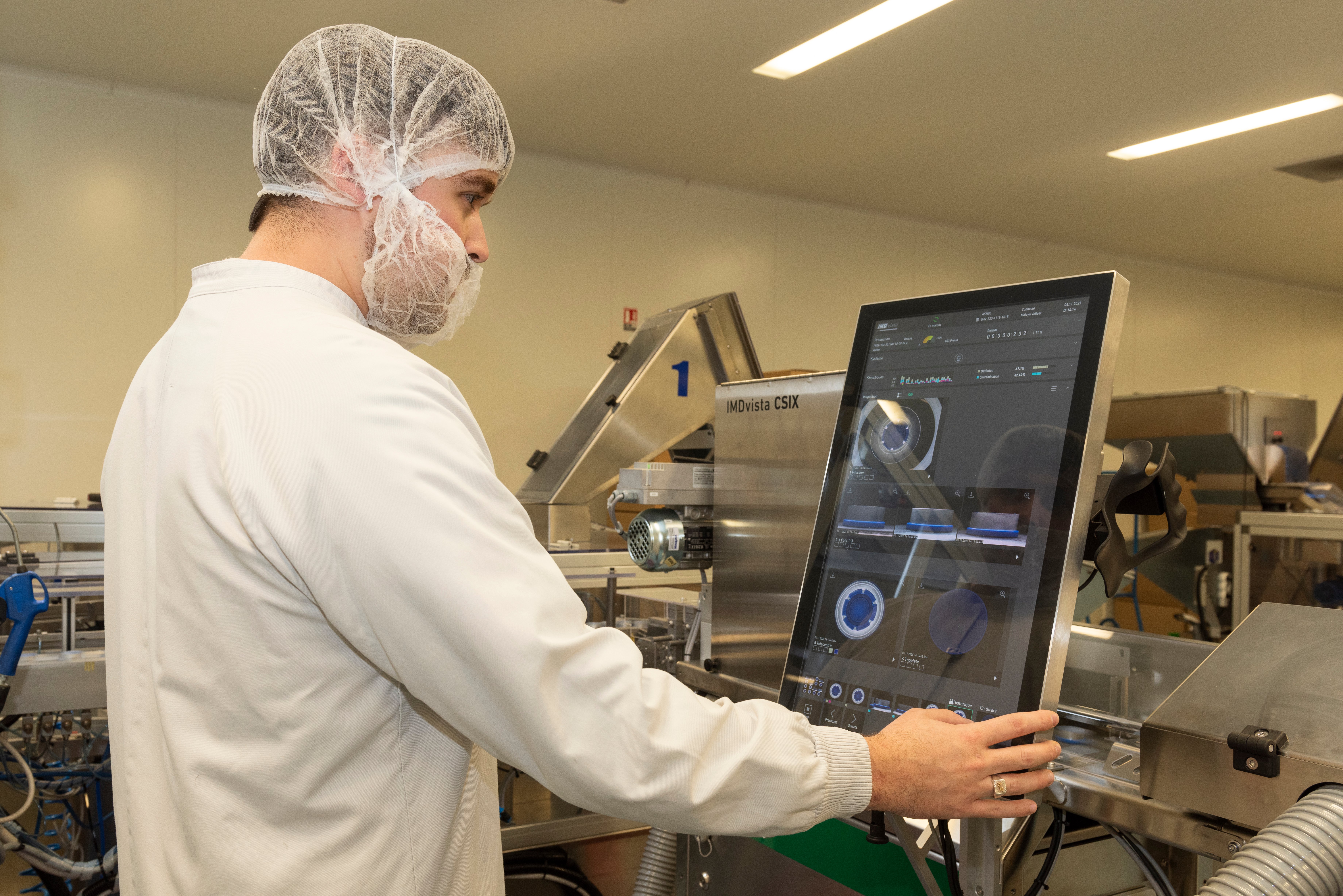
To ensure batch conformity and maintain inspection readiness, Ema Pharma integrates real-time, camera-based inspection systems at multiple points along the cap production line. These systems monitor and record:
● Color conformity of both aluminum shells and polypropylene lids
● Height and diameter tolerances, very important for proper fit and machinability
● Visual surface defects such as scratches, dents, particles, or “mouse bites”
● Ovality and crimping geometry, ensuring compatibility with high-speed filling lines
These inspections are fully automated and traceable, with results stored electronically and linked to each production batch.
For each lot, Ema can provide:
● A Certificate of Conformity (COC) as standard
● An optional Certificate of Analysis (COA), detailing dimensional and visual test results, and, for RTS/RTU formats, bioburden and particulate levels
These controls not only support GMP compliance during audits, but also reduce variability, lower rejection rates on filling lines, and align with PDA TR 76 inspection criteria.
III. GMP control of sterilized cap supply chains
A. Clean caps RTS / RTU: validated processes
For ready-to-use and ready-to-sterilize components, Ema performs:
● Validated gamma irradiation (25–50 kGy, ISO 11137)
● Dose audits and requalification protocols
● Packaging integrity checks
● SAL 10⁻⁶ assurance for sterile caps
Each RTU cap batch can be supplied with:
● Certificate of Conformity
● Irradiation Certificate
● Optional Certificate of Analysis (COA) for particulate and bioburden levels.
B. Controlled Environment Manufacturing
● Clean assembly rooms
● Monitoring of airborne particles and microbial contamination
● PE or Tyvek® double-bag packaging for Grade A compatibility
● Optional Rapid Transfer Port (RTP) packaging for isolator lines
IV. Quality risk management and change control
A. Ongoing risk mitigation measures
Ema Pharma integrates quality risk management into its daily operations through a validated framework built on ICH Q9 principles. This ensures that every potential risk — whether to patient safety, product quality, or compliance, is identified, assessed, and controlled.
Key activities include:
● Material compatibility studies, particularly for aluminum alloys, lacquers, and polypropylene lids, to ensure compliance with pharmacopoeial and regulatory requirements (e.g., EP, USP, CE 1935/2004)
● Functional testing of finished caps, covering torque resistance, flip-off force, mechanical deformation, and machinability — all tested under real-use simulation
● Systematic visual inspections based on PDA Technical Report 76, with clear defect categorization into critical, major, and minor classes — ensuring alignment with industry-wide defect evaluation standards
These measures allow Ema to proactively reduce variability, support customer qualification efforts, and minimize the risk of non-conformities during incoming inspections.
B. Change Notification Protocols
Ema Pharma maintains a formal Change Control process designed to provide full transparency to customers when a critical modification is planned or implemented. This applies to changes affecting:
● Raw materials (e.g. alloy source, lacquer type, lid polymer)
● Production parameters (e.g. crimping geometry, packaging configuration)
● Equipment, tooling, or inspection technology
For each impacted customer, the following steps are triggered:
● Written notification with a detailed description of the proposed change
● Supporting validation documentation, including risk assessment, test results, and qualification reports
● Agreed evaluation window, allowing the customer to perform impact analysis and internal validation if needed
● Formal QA sign-off from both parties before implementation
This structured and collaborative approach ensures regulatory continuity, reduces requalification efforts, and helps maintain a stable supply of compliant, audit-ready components.
V. Supporting Your QA Objectives
A. Key Benefits for QA Compliance
● Full batch traceability and GMP documentation
● Validated sterility assurance for RTU components
● Secure, short European supply chain (100% EU sourcing)
● ESG-aligned policies including phasing out of solvent degreasing by end of 2025
B. Seamless Integration with Your Audit and QA Systems
Whether you're onboarding Ema Pharma as a new supplier or conducting a periodic GMP audit, you'll find:
● An experienced team familiar with QA expectations
● Prompt and precise documentation
● A clean, qualified, and resilient manufacturing setup in France
Conclusion
For QA teams evaluating suppliers of crimping components, Ema Pharma offers a level of GMP maturity, documentation control, and quality performance that aligns with the most demanding pharmaceutical standards. With its ISO 15378-certified site, validated RTU cap processes, and consistent audit performance, Ema acts as an extension of your own compliance strategy, delivering caps you can trust, batch after batch.
No Comments Yet
Let us know what you think